

Bach, Organ Masterworks – vol. 6

Programme details
1 Fantasia/Pièce d’orgue in G, BWV 572
2 Fugue in c, BWV 575
3 « Kommst du nun, Jesu vom Himmel herunter auf Erden »*, BWV 650
4 « Wer nur den lieben Gott läßt walten »*, BWV 647
Prelude & Fugue in c, BWV 546
5 Prelude, BWV 546/1
6 Fugue, BWV 546/2
7 « Wachet auf, ruft uns die Stimme »*, BWV 645
8 « Ach, bleib’ bei uns, Herr Jesu Christ »*, BWV 649
Canonic Variation on « Vom Himmel hoch, da komm’ ich her » in C
(Autograph manuscript version), BWV 769a :
9 Canon all’ottava
10 Canon alla quinta
11 Canto fermo in canone : alla Sesta e al rovescio [sic], alla Terza, alla Seconda, alla Nona
12 Canon alla settima, Cantabile
13 Canon per augmentationem
Prelude & Fugue in C, BWV 545
14 Prelude, BWV 545/1
15 Fugue, BWV 545/2
16 « Wo soll ich fliehen hin »*, BWV 646
17 « Meine Seele erhebt den Herren »*, BWV 648
18 Fugue on Magnificat « Meine Seele erhebt den Herren », tonus peregrinus, BWV 733
_______________________
19 Bonus track : « Suscepit Israel »** in « Magnificat », BWV 243/10
* 6 Schübler-Chorales, BWV 645–650 : transcription for organ by J.S. Bach
** Arrangement for organ by Kei Koito
Information
Recorded: 12–16 October 2020, Hof & Stiftskirche St. Gumbertus, Ansbach (Germany)
Executive producer: Claves Records
Artistic adviser: Gabriel Dubath
Recording engineer: Jean-Daniel Noir
Recording assistant: Louis Noir
Editing: Jean-Daniel Noir & Kei Koito
Tuning: Jürgen Lutz, Orgelmanufaktur, Feuchtwangen
Photographs: Orgelmakerij Reil / Jim Albright (organ), DR
Daniel Muster (Kei Koito)
Design: Amethys
Special thanks to: Hof & Stiftskirche, Ansbach
Carl Friedrich Meyer, Dekanatskantor
Dr. Dieter Kuhn, Pfarrer
Organ Specifications
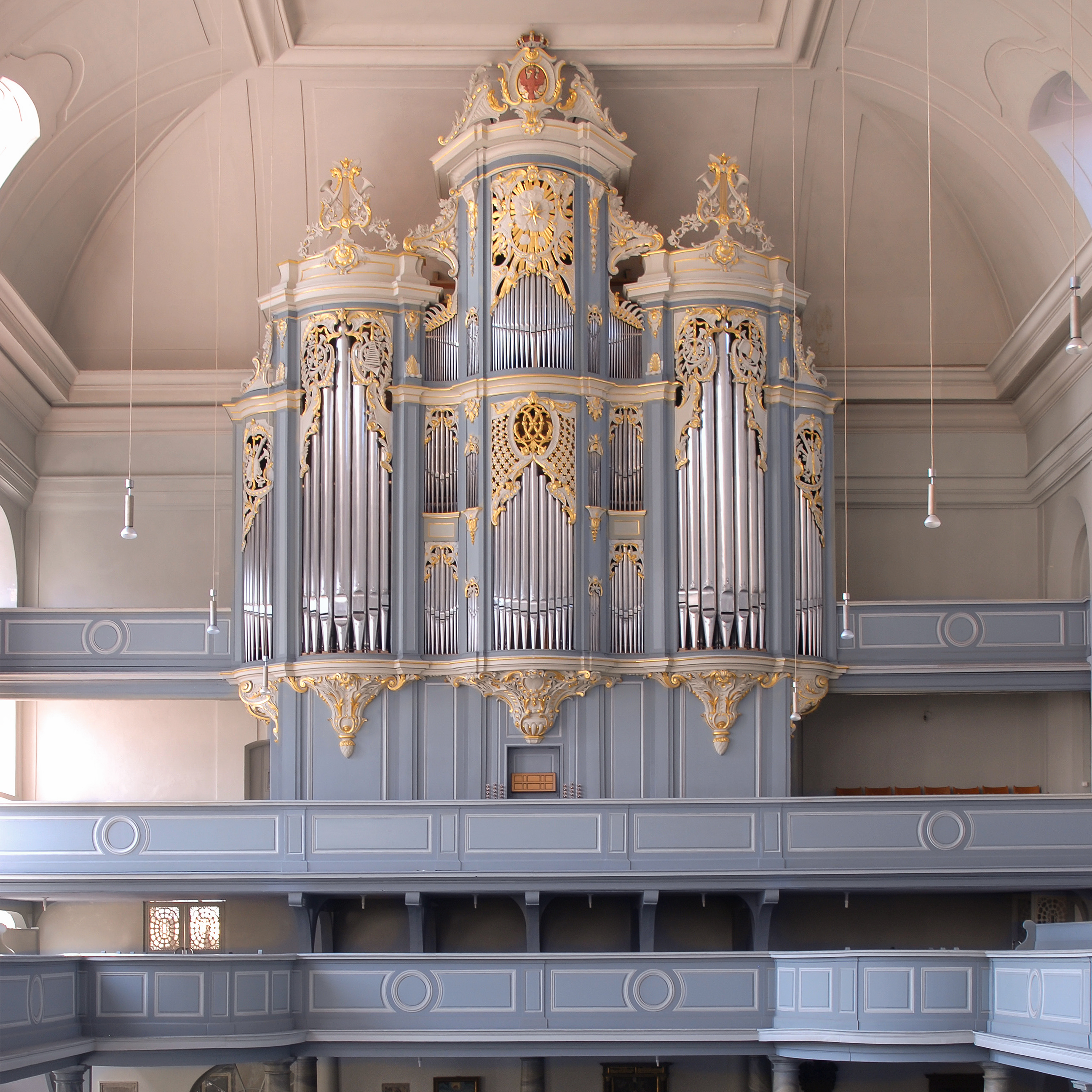
Wiegleb-Organ of Hof & Stiftskirche St. Gumbertus, Ansbach
Built by Johann Christoph Wiegleb, 1736-1739
Restored by Orgelmakerij Reil, Heerde/NL, 2004-2007
|
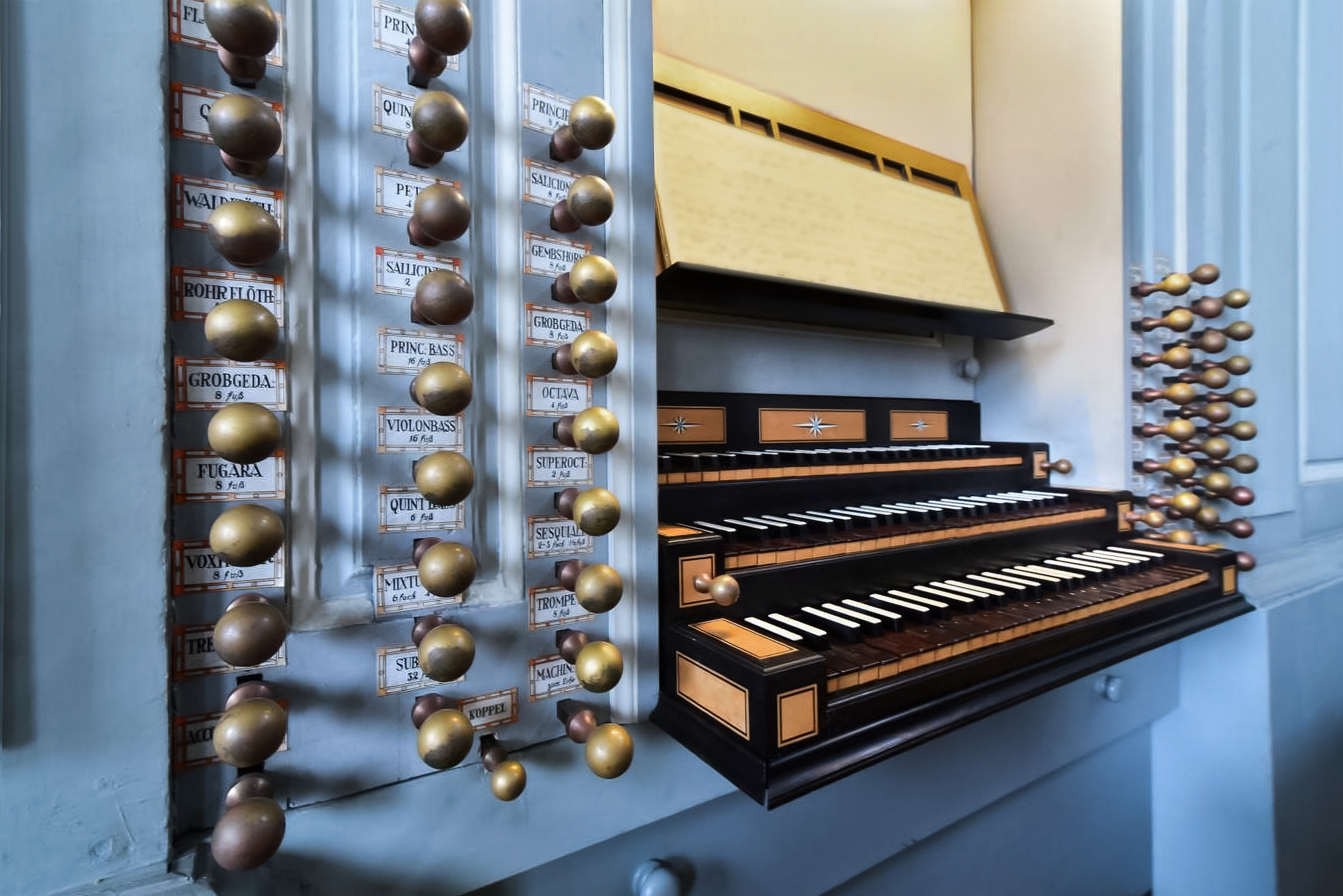
Unteres Werk C-d3 (I) : Principal 8’ Cijmbel 2’ 2fach Sesquialtera 1½’, 2-3fach Mixtur 2’ 8-9-10fach Superoctava 2’ Quinta 3’ Octava 4’ Flöth 4’ Grob Gedakt 8’ Flaut travers 8’ (ab c0) Gembshorn 8’ Viola di Gamba 8’ Salacional 8’ Quintatön 16’ Trompete 8’ Oboe d’amour 8’ Oberes Werk C-d3 (II) : Principal 4’ Flaschiolet 2’ Mixtur 1’ 4fach Quinta 1½’ Octava 2’ Waldflöthen 2’ Röhrflöthen 4’ Blockflöthen 4’ Quintatön 8’ Grobgedackt 8’ Fugara 8’ Fagott 16’ Vox humana 8’ |
Mittleres Werk C-d3 (III) : Principal 4’ Nassat 3’ Sallicinet 2’ Nachthorn 2’ Petitt 4’ Spitzflöth 4’ Quintaten 8’ Echo : 8’, 4’, 3’, 2’, 13/5’ (ab C) (im Schwellkasten) Bässe C-d1 : Principal Bass 16’ Cimpel Bass 2’ 2fach Mixtur Bass 4’ 6fach Bassettgen 4’ Quint Baß 6’ Octav Baß 8’ Violon Baß 16’ Quintadenen-Baß 16’ Posaunen Bass 16’ Subbass 32’ (Holz offen) 10 Bälge 9 x 4 Schuh 4 Sperrventile Tremulant Accordstern Maschinenzug zum Echo Manual-Schiebekoppeln III/II, II/I Calcant Stimmtonhöhe 465 Hz Temperatur : Wiegleb Winddruck : Manuale 66 mm Ws Pedal 68 mm Ws |
Text by Kei KOITO
About the programme
This recording’s programme, performed on the magnificent Wiegleb organ in Ansbach, features free compositions in various styles, prelude and fugue, fantasia, as well as chorales in diverse forms. These works are comparable to vocal compositions in which both the composer’s spiritual life and his speculative research are reflected.
Fantasia / “Pièce d’Orgue” in G major, BWV 572
This work stands as a sublime testament to the young Bach during his Weimar period. Among the various sources, this recording is based on the title “Pièce d’Orgue à 5 avec la pedalle continu [sic]”. The date of this composition is subject to debate: G.B. Stauffer places the first version of the work between 1708 and 1712, J.-Cl. Zehnder during the first three years in Weimar (1708–1711), and S. Rampe even later. The revised version dates from around 1720, the main difference compared to the first version being an expansion of the first part of the triptych.
The work consists of three parts. The first part of the original version contains no tempo indication, but in the revised version, it is marked “très vitement” (very quickly). It is a manual solo, akin to a toccata introduction. Here, a long, sustained monodic melody – already containing the principal subject of the entire work – features a hexachord scale in diminution. This writing is in an improvised style, reminiscent of a passagio.
The second part begins with a surprising entry: a pedal attack on the tonic G. In the first version, it bears the indication Gayement (gaily), and in the revised version, Gravement (gravely). The manual part enters immediately after the initial pedal attack, weaving a five-voice polyphony over an alla breve pulse characterised by harmonic audacity featuring numerous appoggiaturas, likely inspired by French models, and including, among other things, the indication Grand plein jeu suggested by Jacques Boyvin in his two Livres d’orgue (Books of Organ Music, Paris, 1690 and 1700). This is a classic example of French stop combination emphasizing harmonic development while avoiding contrapuntal writing. However, in order to highlight the underlying counterpoint, particularly in the extraordinary tenor solo (successively baritenor/taille/haute-contre, bars 118 to 127), the performer opted rather for a combination of a mixture stop and a reed stop.
Several passages here reveal the connection between France and Italy. Also present is the great tradition of the “hexachord fantasy” from the 16th and 17th centuries, as found in the works by English virginalists, as well as in those of Sweelinck, Frescobaldi and Froberger with passages in durezze e ligature, creating rich, dissonant suspensions in a style of the “réunion des goûts” (union of tastes).
Harmonic tension increases from bar 157, reaching a climax on the dominant that spans nine bars and rises over two octaves. This section comes to a dramatic, abrupt end with a broken cadence on a diminished seventh chord.
The low B note on the pedal (bar 94) was not present on all organs known to Bach. It existed on French organs with an extended pedalboard (ravalement) or on many harpsichords. It reappears later in the Ricercare a 6 from The Musical Offering and in The Art of Fugue.
The third part consists of broken-chord arpeggios with acciaccatura, accompanied by a chromatic descent in long values played on the pedal. This section leads to a climax on the dominant before the long-awaited final cadence triumphs with the main subject of the hexachord scale in diminution. This third part bears the indication Lentement (slowly), whereas in the revised version, there is no tempo indication.
This final section is a creation unique to the young Bach. His bold use of repetitive motifs, as well as the idea of mobility within immobility and/or immobility within mobility, foreshadows some of today’s minimalist composers. It is plausible that this highly original idea might be a kind of response to the music-theoretical disputes between J. Mattheson and J.H. Buttstedt in the second decade of the 18th century, with a view to promoting the modern system. With the Pièce d’orgue, Bach could thus be supporting Mattheson’s progressive stance.
Prelude & Fugue in C minor, BWV 546
The Prelude and the Fugue were not composed during the same period. The Prelude, in a concertante style, unfolds in segmental, ritornello-like movements and provides an excellent example of rhetorical structure: propositio, confutatio, confirmatio, and peroratio. Its 144 bars allow for a systematic division of the A-B-A form in an alla breve metre (2/2). In the episodic divertissements, Bach employs a motoric figure with a remarkable accelerando effect, featuring teeming motifs in minims, crotchets, quavers, semiquavers, triplets, and even dotted rhythms. Nowhere else in Bach’s keyboard works are all these elements brought together. This prelude unfolds in a powerfully grave and dramatic atmosphere. Elements of a vocal nature alternate here with tight, purely instrumental writing, producing strongly contrasted effects.
The very rich polyphony, the tense writing bristling with chromaticism, and the use of the lamento and suspiratio (one of the Baroque rhetoric figures) do not prevent this prelude from being infinitely expressive; on the contrary, they enhance it. It is one of the most monumental works in Bach’s organ repertoire. One might even compare it to the great sacred vocal works. This masterpiece was, moreover, written between 1725 and 1729, precisely during the same period as the St John Passion (1724) and the St Matthew Passion (1727). The style of this concerto-like prelude is significantly shaped by the influence of chorale cantatas. The melodic material in dialogue is very close to the beginning of Cantata 47 (1726), to four of the six Motets for double choir, BWV 225, 226, 228, 229 (1723–1729), and to the opening chorus of the St Matthew Passion.
Composed around 1715 during the Weimar period, the Fugue is built in five voices and actually comprises two fugues. The first deploys a diminished seventh chord, which characterises the beginning of the Prelude and is notably found in the famous “Royal Subject” from The Musical Offering (1747). The second fugue, without an exposition, develops as a figurative elaboration of the first fugue’s divertissement. The same figuration is found in the Ricercar a 6 from The Musical Offering, also written in C minor. This fugue nonetheless demonstrates remarkable dexterity in the art of polyphony.
Prelude & Fugue in C major, BWV 545
By deploying the highest and lowest notes, the opening three bars and the coda offer, in a rather imposing manner, a broad and lyrical character. This is reminiscent of the beginning of the Overtures/Suites for orchestra composed between 1725 and 1738/39, and of the definitive version of this Prelude BWV 545, revised by Bach around 1730 from the original diptych version, written between 1712 and 1717. The Prelude’s introduction is immediately followed by violinistic motifs in diminution of the fugue subject, in unrelenting semiquavers, which are employed in an almost obstinate, even exuberant fashion. These motifs, set over a sustained pedal point, fall directly in line with the “OrgelpunktTokkata” practised by his predecessors in central Germany (Pachelbel, Fischer, etc.) and develop throughout this rather brief prelude. However, this is not merely a matter of stylistic idiom; it is instead treated with great variety and vivacity, progressing quite theatrically to a conclusion in seven voices (!).
The theme C, D, E, F has been explored many times by numerous composers before Bach. Drawing on the sequence of notes C, D, E, F (corresponding to ut, re, mi, fa: ut relevet miserum fatum, to alleviate miserable fate), the young Bach also demonstrates his talent through the use of this theme. It is also found in the Allabreve in D major for organ, the Fugue in C major BWV 846/2, from Book I of The Well-Tempered Clavier, and even in the Dona nobis pacem/Gratias agimus of the Mass in B minor. This Fugue BWV 545 features elements of stile antico with a rigorous alla breve pulse, and very concertante and propulsive divertissements, forming, together with the last three bars, a brilliant conclusion.
Fugue in C minor, BWV 575
Admired by musicologists and leading Bach scholars such as Philipp Spitta, Hermann Keller, and Georg von Dadelsen, this formidable fugue is treated in a seductive manner. Characteristic of the young Bach’s irresistible vivacity, this work has indeed been hailed as one of the finest of all fugues written during the Arnstadt period.
The subject of this Spielfuge, written between 1703 and 1707, is in the canzonetta-style that is notably found in the works of Reincken and Buxtehude, under the influence of Italian string music. Once past the sudden surprise effect of the F# in the pedals (bar 65), in the manner of a toccata in the stylus phantasticus of North Germany (Bruhns, Böhm, Buxtehude…), one also finds here the writing of chamber music in “goûts réunis” (union of tastes) that the very young Bach encountered during his time in Lüneburg. According to his Necrology, it was precisely during this period that he bore his first fruits in the art (technique and composition) of the organ (Bach-Dokumente, III/666).
The 6 Schübler Chorales, BWV 645–650
The Sechs Choräle von verschiedener Art (Six Chorales of Various Kinds) for organ, a collection of six chorale preludes by J.S. Bach, published around 1747/48.
The title “Schübler Chorales” comes from the name of the engraver and publisher, Johann Georg Schübler (1720/25–1755), likely a student of Bach, whose name appears on the title page. Most of these chorales transcribed by Bach originate from his own cantatas.
Here are the six pieces with their provenance and dates of composition:
“Wachet auf, ruft uns die Stimme”, BWV 645, trio
from Cantata 140/4 (1731), c.f. (cantus firmus) in the tenor
“Wo soll ich fliehen hin”, BWV 646, trio
original lost, c.f. in the alto
“Wer nur den lieben Gott läßt walten”, BWV 647, quartet
from Cantata 93/4 (1724), c.f. in the soprano and alto
“Meine Seele erhebt den Herren”, BWV 648, quartet
from Cantata 10/5 (1724), c.f. in the alto and tenor
“Ach, bleib’ bei uns, Herr Jesu Christ”, BWV 649, trio
from Cantata 6/3 (1725), c.f. in the soprano
“Kommst du nun, Jesu vom Himmel herunter auf Erden”, BWV 650, trio
from Cantata 137/2 (1725), c.f. in the alto
The lines of the cantus firmus are always clearly delineated, expressly on the manual and/or pedals. Bach posits here that there is hardly any difference between the actual recitation by the human voice of the chorale text serving as the basis for his works and its figurative rendition through purely instrumental means.
The Schübler Chorales were praised in 1776 by an anonymous author (Bach-Dokumente, II/441): “So schön, so neu, erfindungsreich […], dass sie nie veralten sondern alle Moderevolutionen in der Musik überleben werden”: “So beautiful, so new, so inventive that they will never become outdated but will survive all fashion revolutions in music.”
Canonic Variations on “Vom Himmel hoch, da komm’ ich her”. Autograph manuscript version, BWV 769a
In the aesthetic evolution of Bach’s work, the final decade occupies a special place. With the great speculative works of the composer’s maturity, a new creative period opens; it is characterised by a tendency towards concentration, giving form and structure a unique complexity. Rigorous counterpoint reigns supreme here, marked by an unprecedented economy of means. The importance accorded to the canonic technique at the end of the composer’s life bears witness to this evolution, which saw his formal and architectonic concerns increase. Lorenz Christoph Mizler (1711–1778), a mathematician, philosopher, music theorist, composer, and former student of Bach, founded in 1738 in Leipzig a musicological society, the Correspondierende Societät der musicalischen Wissenschaften, whose explicit aim was to elucidate music from a mathematical and metaphysical perspective, building on Leibniz’s philosophical research.
The Canonic Variations, composed for Bach’s admission to the Mizler Society in 1747/48, are one of Bach’s few works to have been published during his lifetime. This phenomenal work, a contemporary of The Musical Offering and The Art of Fugue, could be considered as forming with them a triptych of a demonstrative character, intended to prove the author’s scientific ability and relevance to his academic colleagues.
The two versions of the Canonic Variations differ in the order of the variations and in a few writing details, though these are not very significant: BWV 769: 1, 2, 3, 4, 5 and BWV 769a: 1, 2, 5, 3, 4.
According to recent research by Gregory G. Buttler, Variations 1 to 3 were composed towards the end of 1745 and engraved together with Variations 4 and 5 around Easter 1748.
According to the order established by Bach for 769a, Variations 1, 2, 3 exemplify a strict contrapuntal model, while Variations 4 and 5 introduce further extraordinary musical elements, notably Variation 5, written in a typical imitatio violonistica style, spanning the entire range of the string instrument with a propulsive momentum and a spectacular turn, rising even to the firmament with the instrument’s highest note, at the antipodes of the opening melody, derived from a hymn written by Luther (text: 1533/34, melody: 1539), the Christmas carol “Vom Himmel hoch, da komm’ ich her”.
I set myself the challenge of recording once again this highly complex work for two reasons: firstly, upon learning that Mizler was originally from Ansbach, where the organ used for this recording is located; and secondly, recalling that my first double Bach album, released in 1989, included the Canonic Variations BWV 769 alongside the 6 Trio Sonatas and the 5 Concertos. Even back then, whilst contemplating the very beautiful manuscript of the definitive autograph version, 769a, I had promised myself that I would record it one day.
Three Versets on the Magnificat, noni toni / tonus peregrinus
The Magnificat noni toni is based on plainchant, the melody of which is the tonus peregrinus – the 9th psalm tone in Gregorian chant. The noni toni was first used in the 17th century, particularly within the German-speaking cultural sphere.
Alongside the hymns specific to the Lutheran church, the Magnificat is most often sung in its German translation, “Meine Seele erhebt den Herren”, as part of the Vespers service. In a composition of rare fullness, Bach composed an admirable melody to this text. This verset paraphrases the “Suscepit Israel”, taken from Cantata 10. The Schübler version, BWV 648, stands on the form of a quartet, in which the performer has taken the liberty of adding harmonisation at the beginning and end over the pedal solo.
As for the “Fugue sopra il Magnificat”, BWV 733, it is a magnificent piece of free-form construction with a truly exceptional momentum: the melodic line of the plainchant/subject is first treated in three voices, then in four, with the counter-subject motif in perpetual and rotatory motion, and finally in five voices. This fifth and last voice appears majestically on the pedalboard in the long and augmented values of a cantus firmus.
This fugue is one of the few pieces among Bach’s major works that can be performed on a short-octave organ, bringing out the different colours of the modal passages. However, on an organ such as the one in Ansbach, the powerful majesty of the 32-foot pedal stop lends itself wonderfully to this piece, providing a divine sensation!
For the “Suscepit Israel”, taken from the famous Magnificat, BWV 243, for orchestra, choir, and soloists, played with two sopranos, an alto, and two oboes in unison for the melody, I attempted to transcribe this piece for organ using soft upper stops and the 2-foot stop on the pedal, in the North German manner, in order to highlight the melody. Knowing that my sound engineer is particularly fond of this piece, and dedicating this organ arrangement to him, I wished to give him a little surprise at the dawn of our last day of hard work, after several long sleepless nights…
This recording was made some six years ago in Ansbach at the time of the Covid-19 pandemic. Shortly afterwards, following an accident, the release of this album was delayed. Having travelled through this “time-tunnel”, the musical motivation nevertheless remains entirely intact. I just have the impression that Bach has become even greater, more luminous than before. I thus wish to express my deepest gratitude to all the people who helped me, over time, to bring this project to completion.
Kei Koito
Translation from French by Michelle Bulloch – Musitext